Just What in the Fetch Is Padel?
The Fastest-Growing Sport on the Planet Is Coming to Salt Lake City
You’ve probably heard whispers about it. Maybe you caught a clip on Instagram—four people smashing a ball off glass walls in some kind of futuristic arena. Maybe your tennis buddy came back from a trip to Spain raving about a sport you’d never heard of. Or maybe you just saw the word “padel” somewhere and thought, “Isn’t that just pickleball with fancier branding?”
Fair question. And the answer is: not even close.
Padel (pronounced “puh-DELL” or just “paddle”—both work) is a racquet sport that blends the best elements of tennis, squash, and racquetball into something entirely its own. It’s played on a compact, glass-walled court. It’s almost always played as doubles. The ball stays in play off the walls, which means longer rallies, more strategy, and a whole lot more fun than you’d expect from your first time on court.
And here’s the part that matters: padel is the fastest-growing sport in the world. Not “one of.” The fastest. Over 25 million people play across more than 90 countries, and the U.S. market is on the verge of a massive breakout. In 2025 alone, more than 14,000 new courts were built worldwide. The sport has a 92% return rate—meaning almost everyone who tries it once comes back to play again.
Salt Lake City? Zero dedicated padel courts. Until now.
So, What Exactly Is Padel?
Think of it this way: padel takes the scoring and competitive structure of tennis, shrinks the court to about a third of the size, wraps it in glass and metal mesh walls, hands you a solid paddle (no strings), and lets the ball bounce off the walls during play. The result is a game that’s faster, more social, and dramatically easier to pick up than traditional tennis.
Here’s the basic setup:

The Padel Court
The court measures 20 meters by 10 meters (roughly 66 by 33 feet)—smaller than a tennis court but larger than a pickleball court. It’s enclosed on all sides by a combination of tempered glass walls and metal mesh fencing, typically standing about 3 to 4 meters high. A net divides the court at the center, just like tennis.
You play with a solid paddle made of carbon fiber or fiberglass—no strings. The paddle has small holes drilled through the face to reduce air resistance, and it’s shorter and lighter than a tennis racket. The ball looks almost identical to a tennis ball but has slightly less pressure, which keeps the bounce lower and the rallies longer.
Scoring mirrors tennis exactly: 15, 30, 40, game. Sets go to six games. If you’ve ever played tennis, the scoring feels instantly familiar. If you haven’t, it takes about five minutes to learn.
Serves are always underhand and must bounce below waist level—no overhead power serves that end the point before it starts. This one rule alone changes the entire dynamic of the game. Every point begins as a rally, and most rallies last longer than you’d think.
The Walls Change Everything
Here’s where padel gets really interesting. Unlike tennis or pickleball, the glass walls are part of the playing field. When the ball hits the wall after bouncing on the ground, it’s still in play. You can let the ball come off the back wall and hit it on the rebound. You can angle shots off the side glass. You can even hit the ball out of the court through the mesh openings (a move called a “bajada” or “por tres” depending on the situation)—and yes, it counts.
This wall play is what makes padel so addictive. It adds a layer of strategy and creativity that doesn’t exist in other racquet sports. Points that look finished keep going. Defensive positions turn into offensive opportunities. And the teamwork between you and your partner becomes everything—positioning, communication, and anticipation matter more than raw power.
It’s also what makes padel so forgiving for beginners. Balls that would be “out” in tennis are still in play here, which means longer rallies, fewer dead balls, and more time actually playing the game instead of chasing balls around.
Where Did Padel Come From?
The origin story is one of the best in sports. In 1969, a Mexican businessman named Enrique Corcuera wanted to build a tennis court at his home in Acapulco. Problem: his backyard wasn’t big enough. So he improvised. He built a smaller court—20 by 10 meters—and surrounded it with walls to keep the ball from flying into the neighbor’s yard. Then he realized something: hitting the ball off those walls was actually more fun than regular tennis.
His wife, Viviana (a former Miss Argentina), wrote the first set of rules as a birthday gift. They called it “Paddle Corcuera,” and it quickly became the most popular activity at their parties.
In 1974, a Spanish aristocrat named Alfonso de Hohenlohe played at Corcuera’s home and was hooked. He brought the sport to the Marbella Club in Spain, where it caught fire among the European elite. A year later, an Argentine visitor named Julio Menditeguy took it to Buenos Aires, where it spread like wildfire. By the early 1990s, padel was the second most popular sport in Argentina, behind only soccer.
Today, Spain has roughly 16,000 padel courts. Italy has surpassed 9,000. Sweden—yes, Sweden—has over 5,000. Europe alone accounts for approximately 45,000 courts, and the International Padel Federation now includes 87 affiliated national federations. The sport is played in more than 140 countries worldwide.
Why Is Padel Blowing Up Right Now?
Every sport has its moment. Tennis had the Open Era. Pickleball had the pandemic. And padel? Padel is having its moment right now—driven by a perfect storm of accessibility, social media, celebrity investment, and pure word-of-mouth enthusiasm.
It’s Incredibly Easy to Learn
Most people can rally within their first 15 minutes on a padel court. The underhand serve eliminates the most intimidating part of racquet sports. The walls keep the ball in play longer, so beginners aren’t constantly stopping to pick up balls. And because the court is smaller, you don’t need elite athleticism to compete. That 92% return rate isn’t marketing—it’s the sport’s defining characteristic. People try it and immediately want to play again.
It’s Deeply Social
Padel is almost always played as doubles, which means every session is a group activity. Four people on a compact court, working as teams, talking between points, building chemistry. It’s less isolated than tennis and more athletic than pickleball. The social element is the engine of padel’s growth—people don’t just play padel, they build friendships around it. In Spain and Argentina, padel is as much a social ritual as it is a sport.
Celebrities and Athletes Are All In
Lionel Messi plays. Serena Williams plays. Rafael Nadal has invested in padel ventures. Eva Longoria, Max Verstappen, Drew Brees, Adam Levine, Daddy Yankee—the list goes on. Andre Agassi joined a $20 million investment round in a luxury multisport concept that features padel as a centerpiece. These aren’t token endorsements; these are people who genuinely play the sport and are putting real money behind its growth.
The Numbers Are Staggering
The U.S. padel market is still in its early stages, but the trajectory is unmistakable. As of mid-2025, there are roughly 688 courts across 31 states serving an estimated 112,000-plus active players. The number of clubs is growing over 50% year-over-year, and more than half of all U.S. padel courts have been installed since January 2024. Industry projections estimate the U.S. could reach nearly 7,000 courts and 900,000 players by 2030.
Globally, the padel market was valued at approximately $248 million in 2025, with projections to reach well over $600 million within the decade. Equipment sales in the U.S. alone surged over 40% in 2024, with leading brands projecting 70%+ growth in 2025.
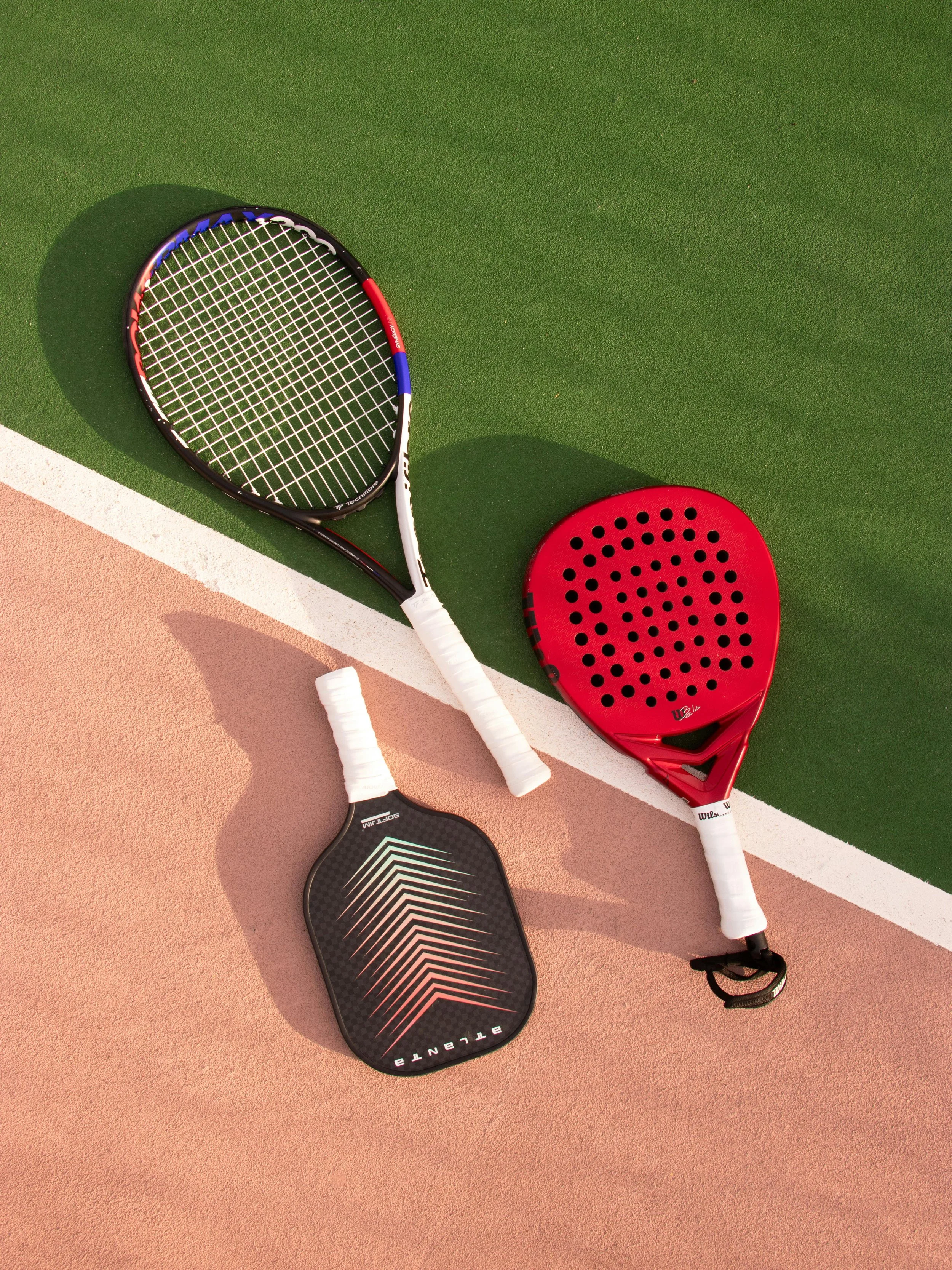
Padel vs. Pickleball vs. Tennis: What’s the Dang Difference?
If you’re a racquet sports person in Utah—and statistically, there’s a very good chance you are—you’re probably wondering how padel stacks up against the sports you already know. Here’s the honest comparison:
What’s the difference between Padel and Tennis? Padel and Pickleball? What the crap is Padel???
The bottom line: if you love pickleball’s accessibility and social energy, padel gives you that plus more athleticism, longer rallies, and the strategic depth of wall play. If you love tennis’s competitive intensity, padel delivers that in a more social, more forgiving format. Padel doesn’t replace either sport—it complements them. In fact, about 30% of U.S. pickleball venues now offer padel courts, and the crossover player base is growing fast.
Why Salt Lake City? Why Now?
Utah has the highest per-capita search volume for pickleball in the country. The state consistently ranks among the top for sports participation. The Salt Lake metro area is projected to add up to 500,000 new residents by 2033. The city welcomes 4.6 million visitors annually, is building toward the 2032 Winter Olympic Games, and has recently attracted NHL and MLB franchise commitments.
In other words: Salt Lake City is a sports city that’s getting bigger, faster, and more ambitious by the year. And right now, there are zero dedicated padel facilities.
That gap is about to close.
Metro Padel Club is building Salt Lake City’s first premium indoor padel facility—a destination designed around world-class courts, professional instruction, and a hospitality experience that goes far beyond just playing a sport. Think of it as a members’ club built around the most exciting racquet sport on the planet.
How Hard Is It to Learn?
This might be padel’s single greatest selling point: it is remarkably easy to pick up. If you’ve held a racket of any kind—tennis, pickleball, racquetball, even ping-pong—you will feel comfortable hitting a padel ball within minutes.
The underhand serve means you’re not spending your first three lessons just trying to get the ball in play. The walls keep rallies alive, so you’re getting a real workout and real competition from day one. And because it’s always doubles, there’s a built-in support system: your partner is right there with you.
At the same time, padel has a high skill ceiling. The wall play, the angles, the teamwork, the touch required to place a shot perfectly off the glass—there’s a lifetime of improvement built into this sport. Beginners have fun immediately. Advanced players find endless depth.
Metro Padel Club will offer professional coaching, group clinics, and structured programming for every level—led by instructors with decades of experience in competitive racquet sports.
Get on the List
Metro Padel Club is coming to Salt Lake City. We’re building something that doesn’t exist here yet—a world-class padel facility with premium courts, expert instruction, and a community built around the sport that’s taking over the world.
Want to be among the first to play? Sign up below for early access, founding member opportunities, and updates as we get closer to opening day.
Frequently Asked Questions
-
Padel is a racquet sport played on a compact, glass-walled court. It combines elements of tennis and squash, is almost always played as doubles, and uses a solid paddle and a depressurized tennis ball. The walls are part of the game—balls can be played off the glass, creating longer rallies and more strategic play.
-
Either “puh-DELL” or “paddle”—both are widely used and accepted.
-
No. While both are social racquet sports with underhand serves, they’re quite different. Padel is played on a larger, enclosed court with glass walls, uses a depressurized tennis ball, and features wall play as a core element. Pickleball is played on a smaller, open court with a plastic ball.
-
Very. Most people can rally within their first 15 minutes. The underhand serve and wall play make the game accessible to beginners, while the strategic depth keeps experienced players engaged. Padel has a 92% return rate—nearly everyone who tries it comes back for more.
-
Over 25 million people across more than 90 countries, according to the International Padel Federation. The U.S. market is growing over 50% year-over-year.
-
A padel paddle (solid, no strings), padel balls (similar to tennis balls but with less pressure), and comfortable court shoes. Most padel facilities, including Metro Padel Club, will offer rental equipment for beginners.